
I made a Substack post about answering the question of “should I go to grad school?” and I got the following question in response:

It was in a chain that honestly had another really good question and observation about the article, and I felt like there’s something to refine from within the question.
The short answer is: yes, exactly.
The longer answer begins with: partially. There’s certainly value in working towards a goal and treating that goal as a guiding light for the actions you take. I very often have told high schoolers I mentor that they need to have some kind of “ball” that they’re keeping their eyes on; something they’re chasing even if its only passively. The analogy is relatively consistent. If you’re not looking at the ball, there’s no way you’re going to hit the ball. Honestly, you won’t even know when to swing the bat. You’re more likely to just get hit by the ball.
It feels like almost everyone who’s ever become notable or successful has had a goal at some point. Sure, sure, they also likely came from good circumstances or had extraordinary luck, which played a major role in their success, but having the goal was required. The goal makes it so a person can take advantage of situations that will advance them in a general direction.
However, I believe that the issue is that life goals are often moving targets. The most inarguable example of this is the hedonic treadmill. As life get’s better, you will seek more or be less satisfied with what you have. To not fall into this trap requires conscious thought and effort to declare enough is enough. And I believe that’s pretty feasible from a monetary perspective, but I don’t believe it is true from an intellectual or fulfillment perspective. Anything can become boring. The things that interest us when we are young are very rarely the same things that interest us months or years into the future. Passions die out. That has to be accepted. Bands break up, people shift careers.
When taking that into account, it becomes a more specific wording of the overall question. Rather than decide based on where you want to go in the overall picture right now, you can instead work in a way that allows you-in-the-future to have the options that they would desire when they’re picking the direction they want to be in the overall picture. For example, maybe you in the future wants to become a doctor just like how you want to right now (assuming you did), then its ideal that you worked towards becoming a doctor as a goal. But maybe there’s a 5% chance you want to become a lawyer. Probably should make sure that you read a bit more, it’ll help both directions. Maybe there’s a 10% chance you want to become an engineer. Okay, let’s also pay attention in math class. 15% actor. Well drama class is there and we do have to sign up for an elective anyway.
None of these fully detract from each other, after all, every career has some core sets of skills. Also, its far more likely you’re not sure if what you’ll want to specialize in within a larger school of thought: do you want to be an electrical engineer or a mechanical engineer? Will you want to become an engineering manager or an individual contributor? There’s no way of knowing a lot of the specifics in the future nor what your predilections will dictate.
So in some sense, I’m really saying that there are actually a ton of right options early on when uncertainty is at its highest and the trajectory of a person can diverge from expectations rapidly. But so long as you have a general angle in mind, you’ll at least be moving forwards and not staying still. If you’re able to keep moving, you’ll be able to keep monitoring where you see the balls you’re tracking are trending towards, what direction your goals are moving in. You’ll also keep building skills that keep options open that may not even be within your current head space.
You will thank you later
My life is a bit of an example of this. I didn’t really know what I wanted to major in college, but I did know I wanted to play a ton more StarCraft 2 and pursue some sort of Esports career with the game. So in high school, knowing that I was likely going to do something STEM related, I chose engineering as my general direction. For each college I applied to, I queued up a random number generator and had a mapping of numbers to engineering majors. For Berkeley, I was MechE. For UCLA, I believe it was bioengineering. For UC Santa Barbara, it was chemical engineering. For CMU, it was computer science. For UCSD, it was mechanical engineering. For UCI, it was electrical engineering. A complete splattering of options.
I picked UCSD because it had a better StarCraft team than UCLA. I also checked some university ranking that year that had UCSD MechE as better than UCLA. Who knows if that one is remotely accurate, and also who really cares. After all, I was gonna play a ton of StarCraft and be a pro while in school like all the other cool gamer kids at the time.
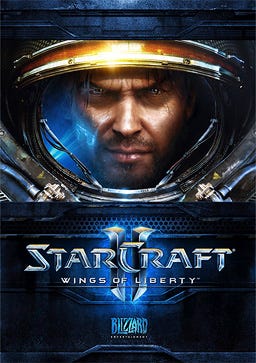
Cover art © Blizzard Entertainment. Image via Wikipedia

Suffice to say, my life did not pan out that way. I was not expecting to go into industry and pursue start up world ad infinitum. I was also not expecting to sour on the idea of becoming a professor in the first year of my PhD. But alas, there’s no way of knowing the future.
The me-right-now does thank the me-in-the-past for taking the path he did though. There were a lot of things that I became knowledgeable about or skilled in or colored my life in a way that allows me to appreciate life in a very particular way. In spite of all the suffering that happened along the way. There are doors that remain open in a way that I don’t think would have been possible without this path and it does feel that as my life has progressed, I’ve only opened doors for myself and find that I haven’t closed a door of interest just yet.
To go back to the analogy, aside from the punctured balls of dreams past, all of the balls are still within view and within reach. I think me-in-the-past for giving me-right-now the opportunity to swing.
thanks for writing a substack for me, i didn’t expect this. i had another question hopefully u can answer after reading this: how or when does one decide to choose a direction and narrow down a bit as i find it incredibly difficult to narrow down without closing certain doors. and obviously part of me always feels a bit unsure or anxious closing doors as im not too sure if it was the right decision. i fear its this constant pressure to be able to act under uncertainty accurately.